Disclosure: This post contains affiliate/referral links. If you sign up through one, I may earn a small commission or service credit at no extra cost to you. I only recommend gear I actually use. See the full Affiliate Disclosure.
This is the first article in The Agentic RVer, a series about professional remote work from off-grid locations using agentic AI in 2026.
AI After 50 — Free Weekly Newsletter
Health discoveries, money opportunities, and life improvements — found by AI, shared weekly.
I am a senior IT manager. My wife is a court reporter. For the past month, we have both been working full-time from a boondocking camp at Wildwood Lake, Tennessee — no electric, no water hookups, no sewer. Two RVs parked 10 feet apart on a gravel pad, sharing a single Starlink dish that pulls 250 Mbps down and 50 Mbps up. I run AI-powered agentic workflows through Claude Code in a terminal window while swatting flies off my monitor.
The AI side is frictionless. Everything else — generators, fuel, water, dump runs, mice, and a rattlesnake skin I found 20 yards from the RV — requires the kind of daily manual labor that no amount of artificial intelligence can automate.
Why We Are Here
We are on family property in rural Tennessee, about 10 miles from the nearest town. We came to be close to family members dealing with health concerns — and to scout Tennessee as a possible future relocation. The boondocking and remote work setup is what makes both of those things possible at the same time.
We have been here about a month. We will probably stay a couple more weeks. During that time, both of us have maintained full-time professional work schedules without missing a beat. Everything I am about to describe in this article is not a weekend experiment. It is a sustained, working deployment.
The Setup: Two RVs, One Starlink, Zero Shore Power
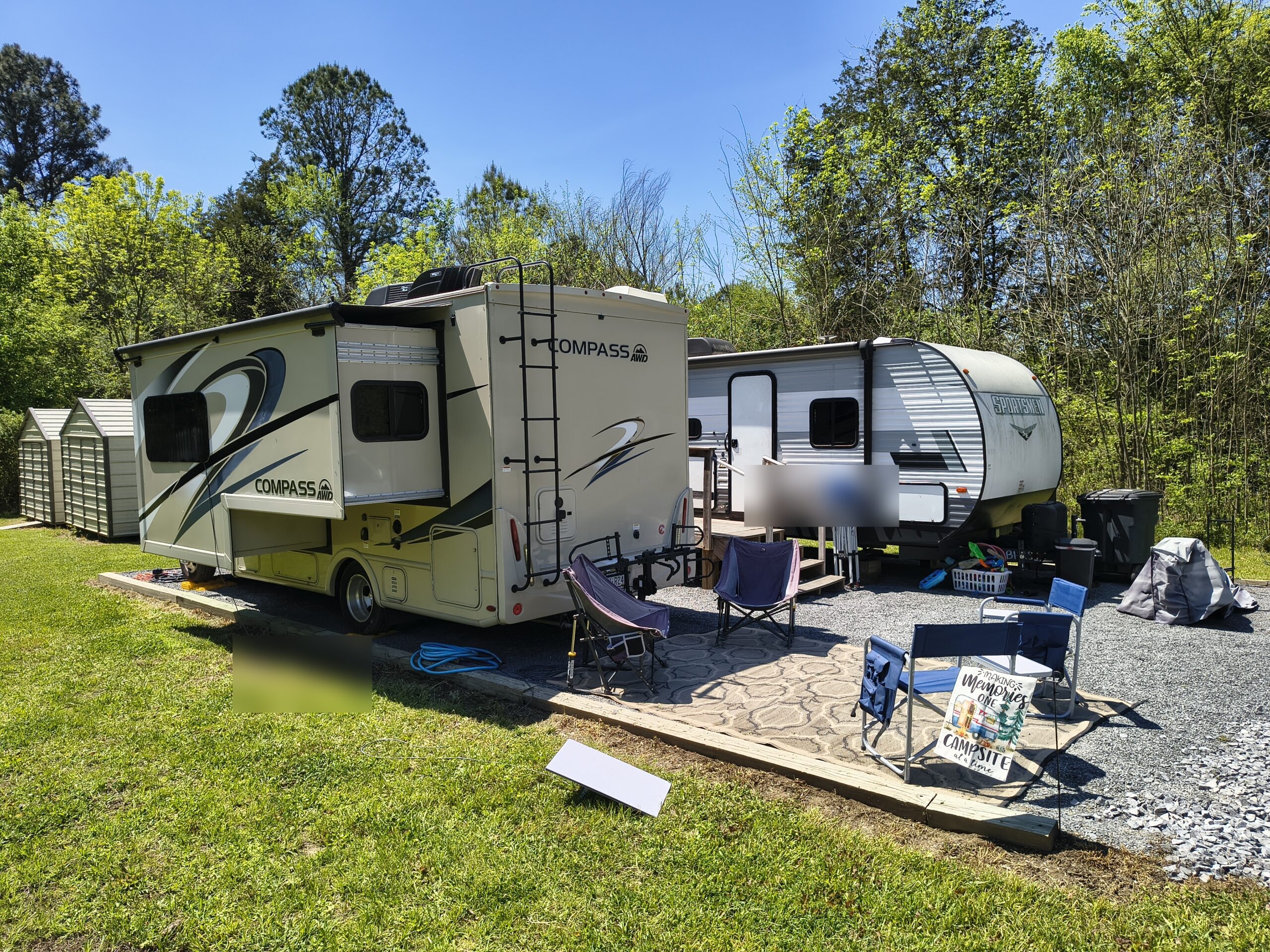
The camp sits on a leveled gravel pad on about 2.5 acres of grass, on private family land. No hookups of any kind.
| Asset | Purpose |
|---|---|
| Thor Compass 23TW | Wife’s workspace + living quarters |
| Second RV (travel trailer) | My dedicated office |
| Starlink Standard | Shared internet across both RVs |
| EcoFlow Delta (~1,200Wh) | UPS buffer for workstation + Starlink |
| Westinghouse 4500W generator (portable) | Powers office RV |
| Onan 4000W generator (built-in) | Powers the Thor Compass 23TW |
| AT&T prepaid hotspot | Backup internet (redundancy) |
Two people. Two RVs. Two generators. One satellite dish. One backup hotspot. Both of us on conference calls at the same time — Zoom, Microsoft Teams — and it works.
Watch: Camp Walkthrough
The Daily Boot Sequence
Every day starts the same way. It is a power management workflow, and if you skip a step, the rest of the day suffers.
0600 — Generator On
The Onan 4000 on the Thor Compass 23TW fires up first. The reason is simple: the coffee maker alone consumes roughly 30% of the EcoFlow Delta’s capacity. Add a hair dryer and a curling iron, and the battery would be dead before 7 AM. Morning domestic tasks run on generator power. Period.
0600-0730 — Charge the Battery
While we are making coffee and getting ready, the EcoFlow Delta is plugged into the generator, charging. This takes about an hour to an hour and a half to reach full capacity. This is not wasted time — it is the infrastructure prep that enables the entire workday.
0730 — Switch to Battery, Start Work
Once the EcoFlow is charged, everything that matters — Starlink dish, laptop, external monitor — plugs into the battery. The generator can shut off. We now have approximately 5 hours of clean, surge-free power for all work equipment.
This is the critical transition. From this point forward, the AI tools, the conference calls, the terminal sessions — all of it runs on stable battery power, isolated from generator fluctuations. No reboots. No dropped calls.
Midday — Generator Back On (If Needed)
If the temperature pushes into the 80s — which it does most days here in April — the generator comes back on for air conditioning. But the work equipment stays on the EcoFlow, protected from the AC compressor surges that would otherwise kill the Starlink connection.
Evening — Visit Family, Battery Drains
We leave the awning lights on and head out to see family. Everything stays plugged into the battery. When we return, we can boot right back up. But by end of day, the EcoFlow is drained.
Next Morning — Repeat
The cycle resets. Generator on, charge the battery, make coffee, start work. Every single day. This is the operating rhythm of a boondocking office.
The Power Problem: Generators Are the Bottleneck
| Generator | Daily Fuel (No AC) | Daily Fuel (With AC) | Use Case |
|---|---|---|---|
| Westinghouse 4500W | ~5 gal/day | ~8-10 gal/day | Office RV |
| Onan 4000W (built-in) | ~3-4 gal/day | ~6-8 gal/day | Thor Compass 23TW |
| Combined | ~8-9 gal/day | ~14-18 gal/day |
At $3.50 per gallon in rural Tennessee, that is $28-63 per day just to keep the lights on.
Nobody selling the “work from anywhere” lifestyle puts that number in the brochure.
The Seasonal Multiplier
Right now in April, we are in the sweet spot. Temperatures in the 70s and 80s. AC needed only a couple hours midday. We can open windows most of the time.
But there are really three cost seasons for boondocking in the Southeast:
| Season | Primary Load | Impact |
|---|---|---|
| Spring/Fall | Minimal AC, occasional heat | Cheapest — baseline fuel numbers above |
| Summer | AC running nonstop, both RVs | Fuel consumption doubles or triples |
| Winter | Propane for heating | 30-lb propane tank lasted ~3 weeks with overnight lows in the upper 30s-40s |
If you are planning to boondock and work through a full Southeast summer, expect your fuel budget to be two to three times what I am reporting here. That is not a rough estimate. That is thermal physics.
Starlink: The One Thing That Actually Works
Starlink has not gone down once in a month of continuous use. Not for weather. Not for obstruction. Not for a service outage. It has been the single most reliable component in this entire setup.
Performance:
- Download: ~250 Mbps
- Upload: ~50 Mbps
- Latency: Low enough that neither video calls nor AI terminal sessions show any degradation
We run both RVs off one dish — Zoom, Teams, Claude Code, streaming TV in the evenings — simultaneously. No buffering.
The Real Power Draw
Field measurements, not manufacturer specs:
| Device | Power Draw |
|---|---|
| Starlink dish (older rectangular panel) | ~40W continuous |
| Laptop + external monitor | ~50-60W |
| Total workstation | ~100W |
My entire remote office draws less power than a single incandescent light bulb. The generators are not running for Starlink. They are running for the air conditioner, the coffee maker, the hair dryer. The work equipment is a rounding error on the power budget.
The Problem Nobody Warns You About
This is the critical discovery that took me by surprise, and it is the single most important technical tip in this article.
When your RV air conditioner compressor cycles on and off — which it does every few minutes — it creates a momentary power surge on the generator’s output. That surge knocks Starlink offline. And when Starlink loses power, it does not just resume. It reboots. Full cold restart. Two to five minutes of downtime.
The generator can be running perfectly. It is the AC compressor cycling — clicking on, clicking off, surging each time — that kills your connection.
You are on a Teams call with your leadership team. The AC compressor kicks on. You vanish for five minutes. In a professional setting, that is not recoverable.
The Fix: Battery as UPS
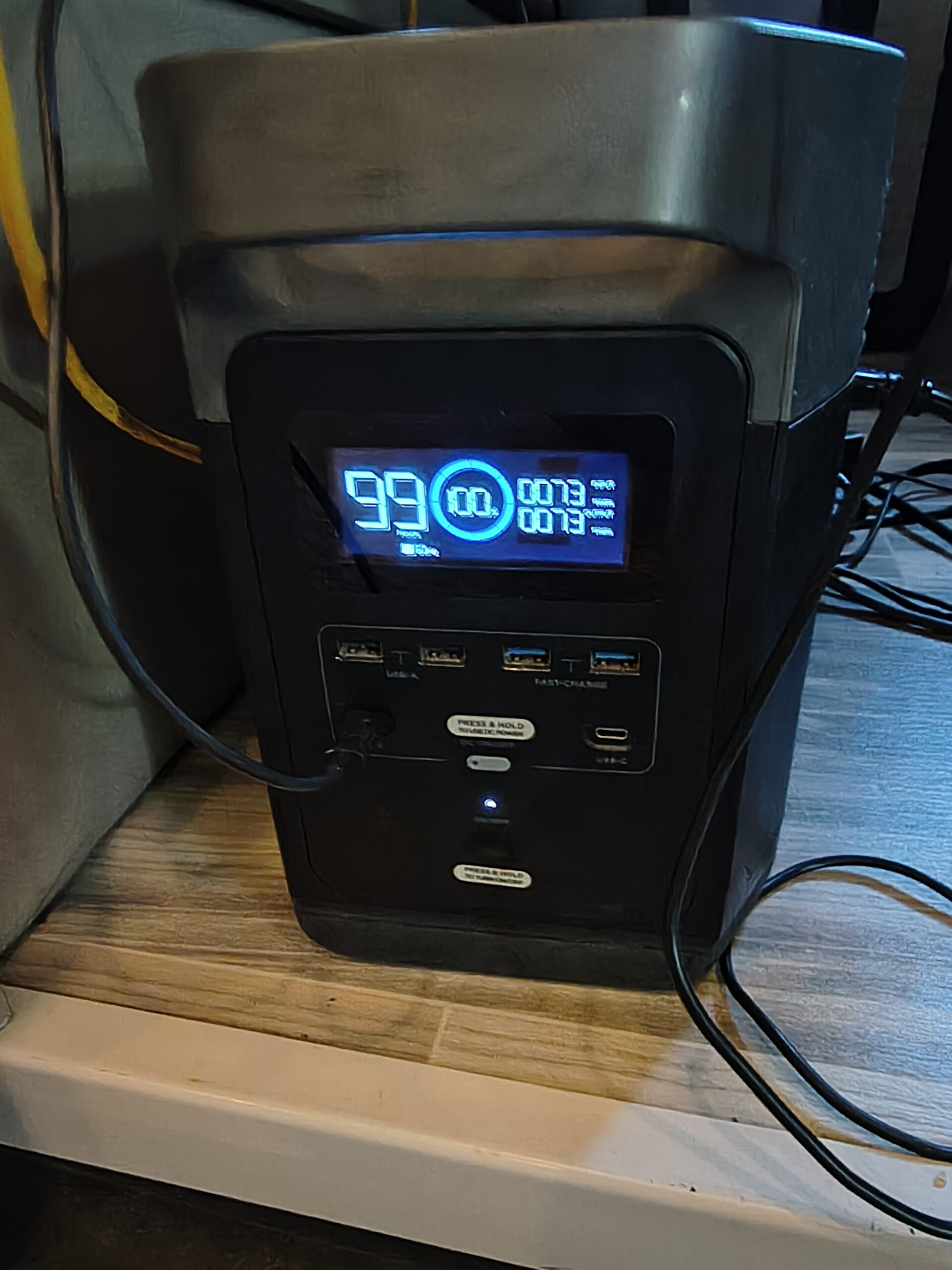
The EcoFlow Delta sits between the generator and all work equipment. It absorbs the compressor surges and delivers clean, consistent power.
At ~100W total draw, the battery provides roughly 5 hours of reliable runtime — enough for a full morning of work, or enough to buffer your equipment while the generator runs AC all afternoon.
If you are planning to work remotely on generator power, budget for a portable power station. This is not optional. It is your UPS against the power surges your AC compressor will create.
Backup Internet: IT Redundancy Applied to Camping
We also carry an AT&T prepaid hotspot as a backup. This comes from 20 years of IT infrastructure experience: anything you rely upon for income needs a failover.
Starlink has not failed us yet. But if it did — weather, hardware issue, service outage — the hotspot keeps us working. The same principle applies to generators (we have two) and the battery (charged daily as insurance).
Redundancy is not paranoia. It is infrastructure design. Apply the same thinking to your boondocking setup that you would to a production network.
Claude Code Over Starlink: Agentic AI at the Edge
I use Claude Code — Anthropic’s CLI-based AI coding agent — for real, daily work:
- Maintaining three websites — fixing WordPress image errors, resolving subdomain conflicts, debugging theme issues
- Debugging and correcting code — I had dozens of WordPress errors (duplicate images, subdomain routing confusion) that would have taken me days to fix manually. Claude Code resolved them through the terminal in a fraction of the time.
- Multi-step agentic workflows — file creation, code generation, web research, email drafting, all chained together in a single session
- Voice input — I use Windows + Ctrl+H to speak to Claude Code instead of typing
Over Starlink from a boondocking camp in rural Tennessee, Claude Code has performed without noticeable degradation. The irony is worth stating plainly: the most advanced tool in my entire setup is the least demanding on the most constrained resource. A command-line agent sending and receiving text does not care about satellite latency the way a video call does.
Voice Input as Accessibility
I want to be direct about something. I use voice input with Claude Code — and with ChatGPT, Google Gemini, and Grok — not just because it is convenient. I have a condition called NAION (non-arteritic anterior ischemic optic neuropathy) in my right eye. Extended screen time is limited and uncomfortable.
Voice input with AI agents has fundamentally changed what is possible for me as a professional. I can build websites, debug code, manage business operations, and write articles — all by speaking. Most major AI platforms now support voice commands. If you have vision challenges, chronic eye strain, or any condition that limits screen time, this is not a nice-to-have. It is a capability multiplier.
The fact that I can do this from an RV in a Tennessee field, over satellite internet, using an AI agent that takes voice commands and writes production code — that is a sentence that would not have made sense 18 months ago.
The 72-Hour Cycle: Water, Waste, and Work Interruptions
The Thor Compass 23TW carries:
- ~41 gallons fresh water
- ~32 gallons gray water
- ~32 gallons black water
With two people, the fresh water tank lasts 3-4 days. Every 72-96 hours, work stops.
We are fortunate — our spot has a water container on-site, which eliminates the 10-mile drive to town for fresh water. But the dump run still requires breaking camp.
What the Interruption Looks Like
- Disconnect Starlink dish
- Shut down and stow generators
- Secure loose equipment
- Drive to dump station
- Dump black and gray tanks
- Fill fresh water
- Return to camp
- Re-level the RV
- Restart generators
- Wait for Starlink to reacquire satellites (2-5 minutes)
- Resume work
Best case: 1-2 hours. Worst case: half a day. And it happens every 3-4 days. Plan your meeting schedule around it or it will plan itself around you.
The Wildlife Report
This is not a section I expected to write in an article about remote work infrastructure.
Flies. Tennessee in April, they are constant. Keep the screen door closed. Keep a fly swatter within arm’s reach. You will be on a conference call, debugging code through an AI agent, and swatting a fly off your monitor — all at the same time. Accept it.
Mice. We are surrounded by 2.5 acres of grass. A mouse had been visiting for a few nights. Caught it on a glue trap last night. If you are camping in grass, expect rodents. Set traps.
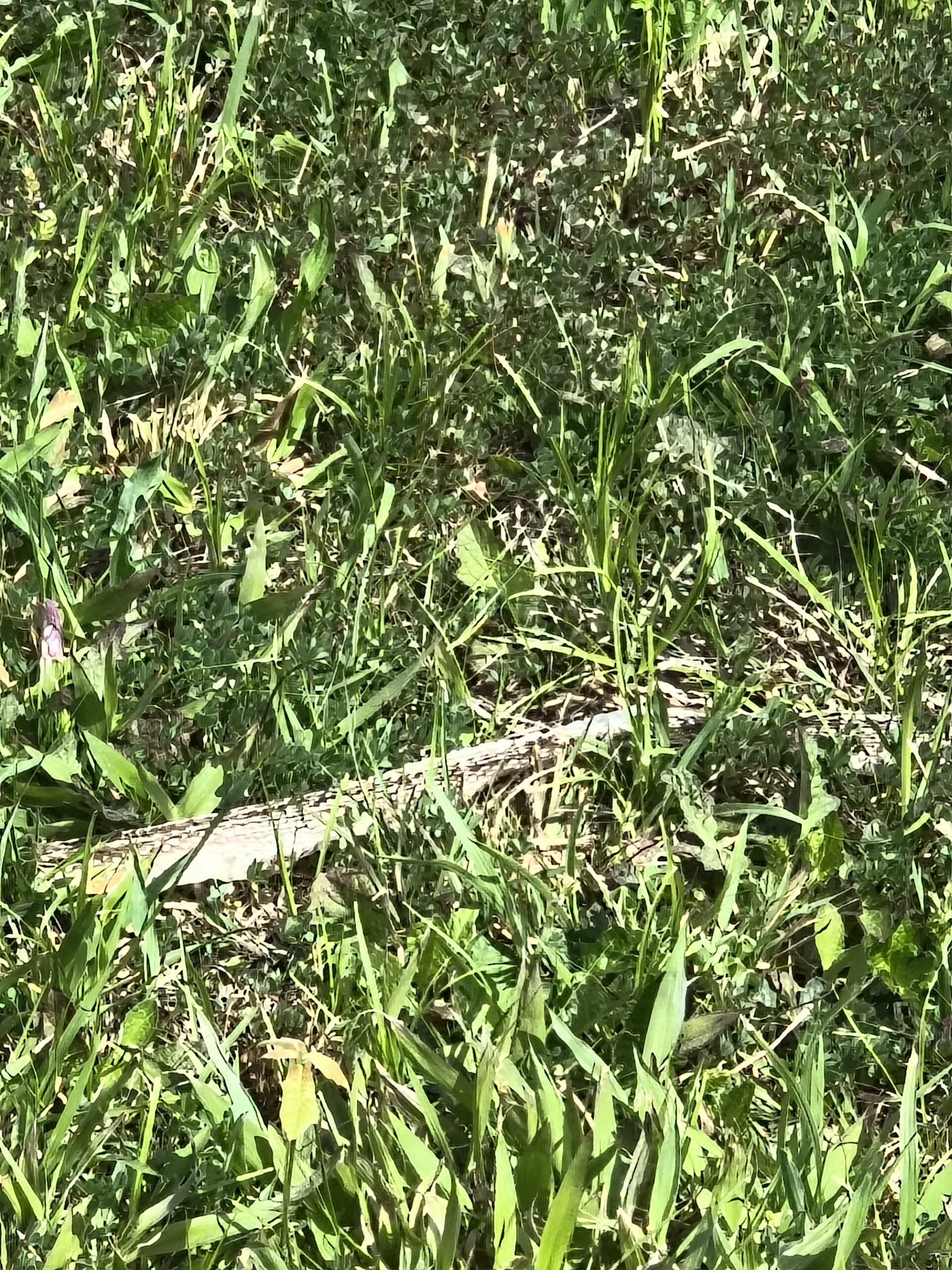
Snakes. I found what I believe is a gray ratsnake skin about 20 yards from the RV. From what I have read, gray ratsnakes are beneficial — they keep the rodent population down. So the ecosystem around my office is managing itself: the snake eats the mice, the mice eat whatever mice eat, and I am in the middle trying to deploy a website.
Cardinals. We have a territorial cardinal that has decided his reflection in the RV window is a rival. He hits the glass repeatedly throughout the day. You are mid-sentence on a conference call, an AI agent is writing code in your terminal, and a bird is trying to fight its way through your office window. This is the ambiance.
No AI agent is going to handle any of this for you.
System Thinking: PMP Logistics Applied to Off-Grid Life
I have spent 20+ years managing enterprise IT projects for Fortune 500 companies. The same principles apply here.
| PMP Concept | Corporate IT | Boondocking |
|---|---|---|
| Resource Leveling | Balance team workload | Stagger generator runtime to extend fuel |
| Critical Path | Tasks that block delivery | Water tank = hard deadline on camp duration |
| Risk Register | Threats to the project | Generator failure, Starlink outage, weather, wildlife |
| Buffer Management | Slack for unknowns | 1-day fuel reserve + 1-day water reserve |
| Dependency Mapping | Task A blocks Task B | No fuel → no power → no Starlink → no work → no income |
| Redundancy | Failover systems | Second generator, AT&T hotspot, daily battery charge |
The dependency chain is brutally linear: fuel → generator → power → Starlink → work → income. Every link is a single point of failure.
In corporate IT, we architect redundancy at every layer. Out here, redundancy means a second generator, a backup hotspot, and a $400 battery charged every morning. That is the entire disaster recovery plan.
The Real Cost of “Working From Anywhere”
Weekly operating cost, both RVs, April in Tennessee:
| Expense | Weekly Cost |
|---|---|
| Generator fuel (spring, minimal AC) | $200-315 |
| Generator fuel (summer, constant AC) | $340-440+ |
| Starlink subscription | ~$30 ($120/month) |
| Dump station fees | $10-25 per visit |
| Propane (cooking, water heater, winter heat) | $15-30 |
| Groceries (rural, limited options) | $150-200 |
| Total (spring/fall) | $405-600 |
| Total (summer with AC) | $545-725+ |
That is $1,600-2,900 per month before RV maintenance, insurance, or vehicle costs. A furnished apartment in Chattanooga — 30 minutes away — runs $1,200-1,500.
Boondocking is not a financial optimization. It is a lifestyle decision with a real operating budget. Know your number before you commit.
What AI Cannot Do For You Out Here
In a single terminal session, by speaking into a microphone from an RV in a Tennessee field, I can ask an AI agent to build a website, fix 30 WordPress errors, draft a dozen emails, and research a medical condition.
I cannot ask it to fill the water tank. Catch the mouse. Swat the fly. Drive to town for gas. Find the rattlesnake. Convince a cardinal to stop attacking its own reflection in my office window. Level the RV after rain. Fix the sewer hose at 6 AM.
That is the thesis of this entire series: in 2026, AI agents can manage your digital life with remarkable autonomy — but the physical world remains stubbornly, completely manual.
The things you take for granted in a house — water, power, climate control — become daily projects when you are boondocking. But the technology has finally caught up to make the work itself seamless. Starlink delivers 250 Mbps to a field in Tennessee. An AI agent takes voice commands and writes production code. A $400 battery keeps it all running for 5 hours without a generator.
The grit is in the gap between those two realities. And honestly, that gap is where the most interesting problem-solving happens.
Coming Next in The Agentic RVer
- Your AC Will Kill Your Starlink — the power surge problem in detail
- The 72-Hour Clock — water logistics as a work constraint
- Generator Math — the real fuel costs nobody talks about
- The Two-RV Office — two people, two workspaces, one dish
- Mice, Mud, and Meetings — the unautomatable side
- AI Agents Over Satellite Internet — what works on constrained bandwidth
- Conference Calls From the Woods — professional audio on generator power
- System Thinking for Nomads — PMP applied to boondocking
- Why Hasn’t AI Solved the Generator Gas Problem Yet? — designing a boondocking agent
- Is It Worth It? — the honest ROI
Future articles will also cover AI-powered trip scouting, route optimization, and autonomous travel planning.
Dominic Ferrara is a Senior IT Manager with 20+ years in enterprise IT, currently boondocking in Tennessee while running agentic AI workflows over Starlink. He uses voice input with AI coding agents due to NAION-related vision limitations — and writes about the intersection of enterprise technology, remote work, accessibility, and off-grid life.
Transparency: Articles on this site are written with AI assistance (Claude Code) and reviewed, edited, and fact-checked by Dominic Ferrara based on personal experience. All data points are from actual field measurements and real-world use.
More From the Agentic RVer Series
- Your AC Will Kill Your Starlink
- Generator Math
- The 72-Hour Clock
- Mice, Mud, and Meetings
- AI for RV Road Trip Planning
Get stories like this every week. Subscribe to AI After 50 — free weekly stories from the intersection of AI, health, and real life after 50.